
God Designed Every Detail
What the tabernacle's plans has to teach us about my sons genetic conditions

There are some parts of the Bible that, if we're honest, we’re tempted to skip or skim just to get through our Bible reading plan. We affirm with our lips and confessions that “all Scripture is breathed out by God and profitable for teaching, for reproof, for correction, and for training in righteousness” (2 Timothy 3:16). Yet in practice, we quietly deny that when we skim over the parts that seem “unimportant.”
One of those sections for many believers is the latter half of Exodus. In chapters 26–28 and again in chapters 35–40, God gives detailed instructions for building the tabernacle, followed by the people of God carrying them out. At first glance, it reads like construction plans. Cubits, fabrics, gold rings, curtains, lampstands, and priestly garments. It’s easy to wonder, If we’re not building a replica of the tabernacle, what does this have to do with us?
The answer is everything.
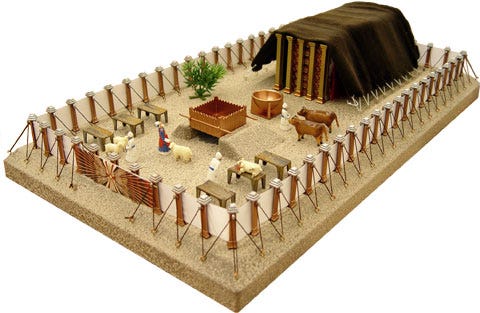
The tabernacle wasn’t just an elaborate tent in the wilderness. It was a picture of something far greater. It pointed to Jesus, the true meeting place between God and man. As John writes, “And the Word became flesh and dwelt among us” (John 1:14). That word “dwelt” literally means “tabernacled.”
The tabernacle pointed forward not only to God’s presence with His people but to something even greater: God Himself taking on human flesh. Jesus was the fulfillment of the tabernacle and the temple. God’s dwelling with His people made flesh.
But the beauty of God’s design didn’t stop with the tent in the wilderness or even with the incarnation of Christ. The same God who designed the intricate tabernacle shaped Christ's earthly body within Mary’s womb. He formed the exact human frame that would bear our griefs, carry our sorrows, and be pierced for our transgressions. As Isaiah prophesied:
“He had no form or majesty that we should look at him, and no beauty that we should desire him. He was despised and rejected by men, a man of sorrows and acquainted with grief” (Isaiah 53:2–3).
Jesus wasn’t formed to meet earthly standards of beauty. He was crafted by the Spirit to perfectly reveal God to us. His form, His limitations, even His suffering were no accident. It was part of the beautiful, Spirit-designed plan of redemption.
And if God was that intentional in forming Christ’s earthly body, what does that say about how He formed yours?
Psalm 139:15 declares, “My frame was not hidden from you, when I was being made in secret, intricately woven in the depths of the earth.” That same word for “intricately woven” carries the image of embroidery. Careful, skillful, beautiful design. The God who gifted the weavers, engravers, and embroiderers of the tabernacle with His Spirit (Exodus 35:35) is the same God who wove you together in your mother’s womb.
He wove my boys together too.
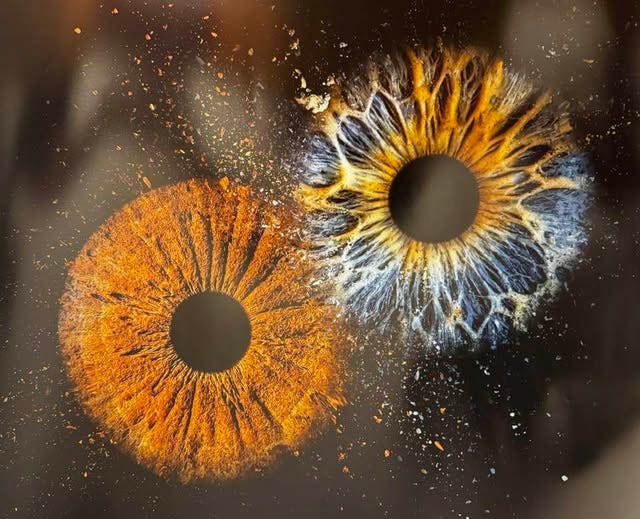
My oldest sons, Judah and Knox, were both fearfully and wonderfully made. But not according to the world’s narrow categories of “normal.” Judah, with severe autism. Knox, with Williams Syndrome and congenital heart disease. Their bodies, their minds, their differences. All designed by the same loving, intentional God who embroidered every curtain in the tabernacle and knit together the human body of Christ.
We can look at those imperfections. The delays, the diagnoses, the difficulties. And be tempted to think God’s design slipped somehow. But it didn’t. Even when we cannot fully understand His purposes, we can trust that He is intentional, even in the fragile and difficult places. Not for them. Not for you. God’s design isn’t just about outward perfection. It is about displaying His glory through the unique, intricate, sometimes fragile bodies He creates.
And that includes all of us. Whether your limitations are visible or hidden, whether they come from disability, weakness, or simply the frailty of life in a broken world, God's careful design extends to you too.
A Few Key Takeaways from the Tabernacle Instructions:
1. God Cares About Skillful, Intentional Work
Exodus 31:1–6 shows God calling Bezalel and Oholiab, filling them with His Spirit to do beautiful, skillful, precise work. Their craftsmanship wasn’t just practical. It was worship. God still works skillfully. Not only through human hands but in the very knitting together of every human life. Including yours. Including your children’s. Including mine.
2. God’s Design Includes Our Weaknesses and Imperfections
The tabernacle wasn’t perfect by human standards. It was made of fabric and wood, fragile materials that would one day wear out. But God chose to dwell there anyway. Likewise, Jesus’ body bore weakness and suffering. And in His wisdom, God also knits together our fragile, imperfect bodies for His purposes. His strength is often displayed most clearly in weakness (2 Corinthians 12:9).
3. God’s Attention to Detail Reveals His Love for You
The tabernacle was beautiful. Blue and purple yarns, gold, fine linen, precious stones. Every detail reflected God's craftsmanship. That same care is reflected in your creation. Your abilities. Your limitations. Your very DNA. Even when life feels messy or broken, you are not an accident. You are His workmanship (Ephesians 2:10).
So when you come to those “boring” parts of Scripture, slow down. Look at the blueprints. Look at the embroidery. Look at the details. The same God who designed the tabernacle designed His Son’s body. And He designed yours. Fearfully. Wonderfully. Intentionally. Imperfections and all.