
The Last Battle
How the strangest battle of World War 2 points to our lives in these end times.

In the past year I have read two books entitled The Last Battle. The first is C.S. Lewis’s classic conclusion to his Narnia saga, and it is probably the dozenth time I have read and enjoyed that story. The other was The Last Battle by Stephen Harding, which details the Battle of Castle Itter. This was possibly the strangest battle on the European front in World War II. As I was reading them, I began to see an interesting connection.
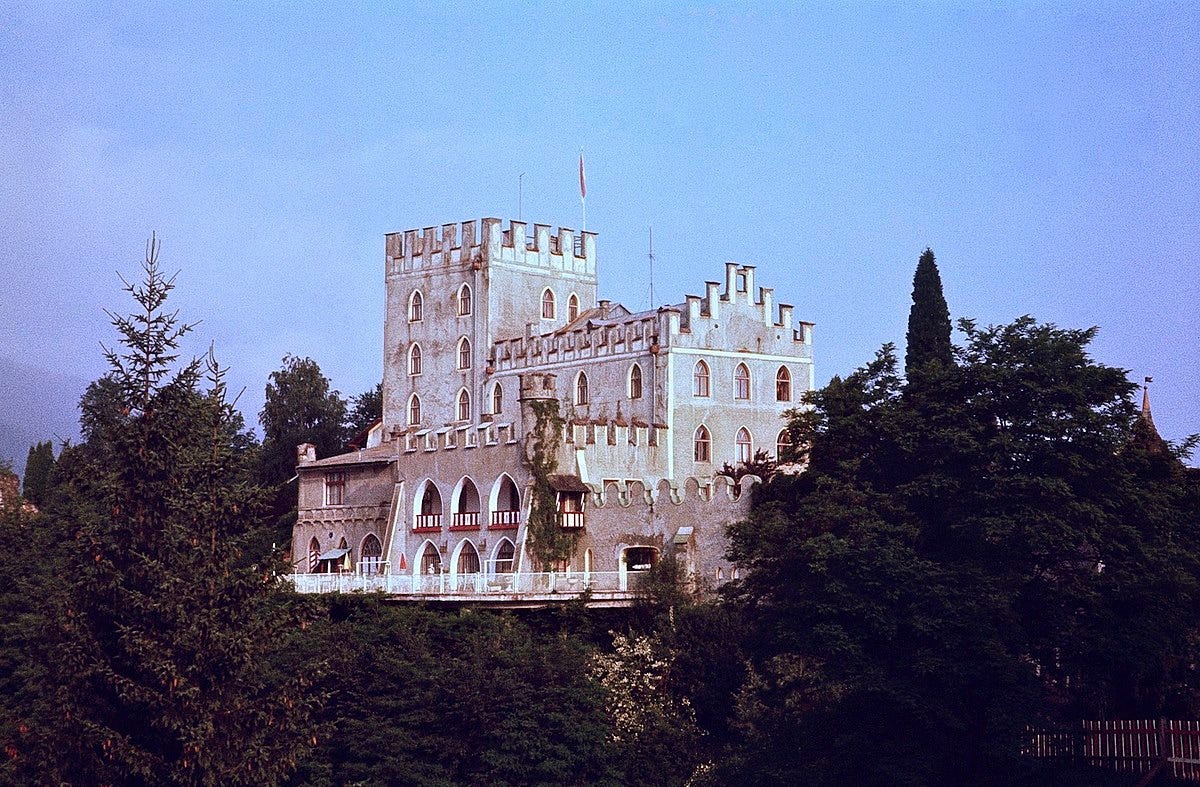
What makes the Battle for Castle Itter unique is the factions that faced off. On May 5, 1945, just days before Germany surrendered, Castle Itter in Austria became the site of an unlikely alliance. Inside the castle were some of the most prominent French prisoners of war—former prime ministers Édouard Daladier and Paul Reynaud, generals like Maurice Gamelin and Maxime Weygand, and even Charles de Gaulle’s sister. These men had been taken hostage by the Nazis as bargaining chips. When the SS troops advanced to recapture the castle, a remarkable coalition rose up to defend it.
The defenders included a small detachment of American soldiers led by Captain John “Jack” Lee, a group of Austrian resistance fighters, and—most astonishing of all—a unit of German Wehrmacht soldiers under Major Josef Gangl, who had turned against the Nazis and decided to fight alongside the Allies. Even the French captives themselves took up arms. This strange fellowship of Americans, Austrians, Germans, and French nobility stood shoulder to shoulder, holding off a much larger Nazi assault until reinforcements could arrive. Hitler was already dead. The war was all but won. And yet, the battle was not over.
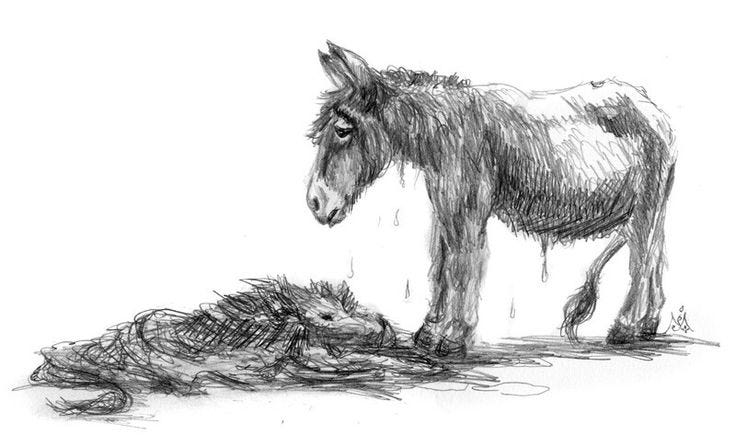
In Lewis’s The Last Battle we see the end of all things portrayed in Narnia. It is a story about deception, loyalty, and the unveiling of the true King. At the center of the deception is a simple donkey named Puzzle. Puzzle is persuaded by a crafty ape named Shift to wear a lion’s skin and impersonate Aslan. Though Puzzle never fully understands the weight of his actions, he becomes a reluctant figure in this false religion—a kind of false messiah propped up by lies. Yet, when the final reckoning comes and the true Aslan returns, Puzzle does not remain an enemy. Instead, he abandons the deception, hangs his head in shame, and walks with the faithful toward Aslan. Lewis paints this with tenderness, showing that even one caught up in lies can yet find grace when the true King arrives.
Although there are many differing views among Christians on the end times, there are a few truths upon which all agree. Revelation 7:9 tells us there will be “a great multitude that no one could number, from every nation, from all tribes and peoples and languages, standing before the throne and before the Lamb.” Jesus is redeeming not just the nation of Israel, but the entire world. At the cross, the war was won. Colossians 2:15 reminds us that Christ “disarmed the rulers and authorities and put them to open shame, by triumphing over them in him.”
We are currently living in the “in-between”—in the already and the not yet. We live between Hitler’s death and the final declaration of victory. The decisive blow has been struck, yet the battles continue. In this in-between time, we will sometimes see those who were once our enemies join the fight—just as German Wehrmacht soldiers stood alongside Americans at Castle Itter, and just as a donkey once misled by lies found himself walking toward Aslan in the end. Romans 5:10 reminds us, “For if while we were enemies we were reconciled to God by the death of his Son, much more, now that we are reconciled, shall we be saved by his life.”
Praise God, for we were all once enemies of God, but now we are adopted children of the Almighty King.