
Two Thoughts on Prayer
Bryan Chapell’s Excellent Book on Prayer

I recently read Praying Backwards by Bryan Chapell and I cannot recommend it strongly enough. The book argues that praying “in Jesus’ name” is not merely a phrase we add to the end of our prayers, but something that fundamentally reshapes our understanding of what prayer truly is.
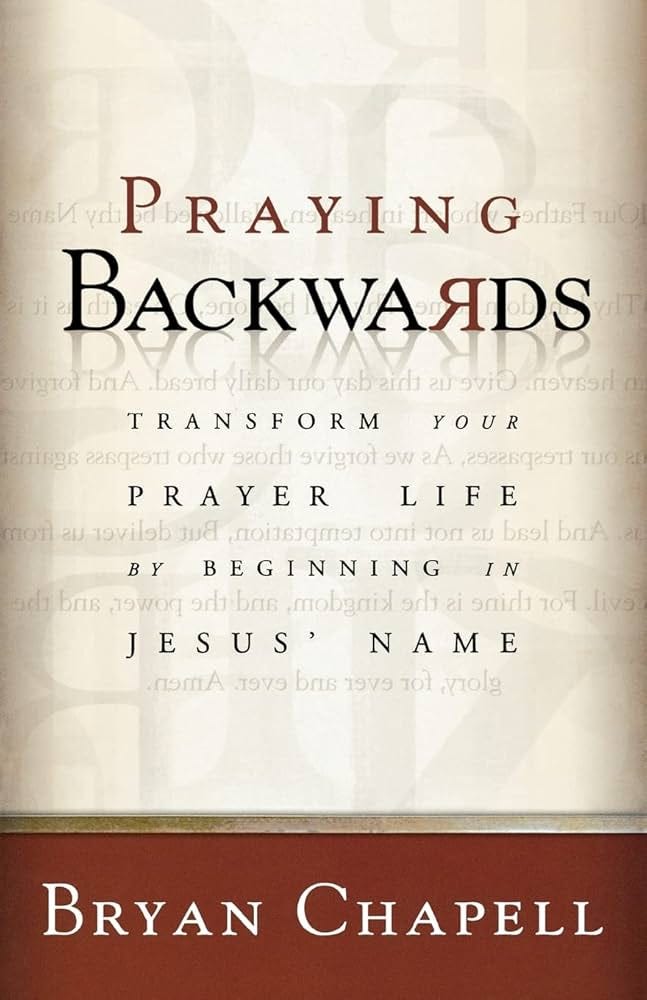
In an effort to encourage you to read the book, I want to share two quotes that have significantly shaped how I think about prayer.
1. Praying without Doubting
As a pastor and a parent, I have spent quite a bit of time in hospitals and at the bedsides of sick loved ones. In those moments, there is a subtle prosperity-gospel instinct that says unhelpful things about prayer.
Chapell speaks directly to those situations:
“Some people say that you are not praying with sufficient faith if you follow your petitions with, ‘Yet, Lord, not my will but your will be done.’ Others may claim you are hedging your bets or leaving yourself an escape hatch for explaining unanswered prayer. But do not let anyone make you feel guilty or ashamed for praying as Jesus did in the Garden of Gethsemane.” (pg. 52)
Jesus does say, “Therefore I tell you, whatever you ask for in prayer, believe that you have received it, and it will be yours” (Mark 11:23–24), but this is not the only thing Scripture teaches on prayer. Those words assume that we are praying in accordance with the will of God and that we are trusting what it means to pray in Jesus’ name.
So to say, “Yet Lord, not my will but your will be done,” is not an escape hatch for doubt. It is an expression of trust. It is trusting that Jesus knows our needs better than we do.
Prayer is not telling God what we need and what He has to do about it. Prayer is bringing our faith before our God and trusting Him to provide the good gift that we need.
2. Prayer is Creative
Prayer is done by the Spirit of God, stirring within us what we need to pray for and bringing those prayers before the Father through the work of Jesus to accomplish the will of God. From beginning to end, God is at work in the process.
Our God is a creating God. He created the universe that we see, and He is actively, through the work of the Son and the Spirit, recreating and renewing the world.
Chapell captures this with striking language:
“When we speak to God, his words in us create the world before us in which he is working. As God once created the living world by the word that he spoke (Ps. 33:9; John 1:1–3), he now re-creates the world in which we live by speaking his words through us (1 John 2:14; Rev. 19:13–16). We become co-creators of this new world order by virtue of the Word of God in us that by his Spirit is working all things together for our good (Rom. 8:28, 32).” (pg. 177)
That is strong language, but it is meant to be.
We are co-creating when we pray, not as creators alongside God in equality, but as those who are being brought into His work. God is the Creator, and we are His creatures, yet in His kindness He allows us to participate in what He is doing, shaping both our hearts and the world around us according to His will.
We are like the child of an artist who is allowed to join in the brush strokes, or the son in the workshop who is invited to hammer in the final nail. The work belongs to the Father, but the joy of participation is given to the child.
I hope you find these two truths helpful as you pray today.
You are trusting the One who holds the universe with every burden you lay at His feet, and you are being drawn into His work by your Father, the all-creating One.