
Why the Trinity Matters
A Recent Bible Study Outline

The Trinity – One God in Three Persons
“The Trinity is not a problem to be solved but a mystery to be adored.”
Have you ever paused in prayer and wondered: Who exactly am I talking to—Father, Son, or Spirit? If so, you’re not alone. Many Christians love God deeply but struggle to understand the heart of His nature: that He is Trinity—one God in three persons.
This doctrine can feel abstract, even intimidating. But the more we meditate on it, the more we realize: the Trinity isn’t just a theological puzzle. It’s the key to understanding the beauty of God, the shape of the gospel, and the richness of our Christian life.
I. The Trinity at a Glance
The doctrine of the Trinity affirms that there is one God who exists eternally in three persons: the Father, the Son, and the Holy Spirit. Each is fully and equally God, distinct in personhood, yet perfectly united in essence.
Karl Barth once said, “The triunity of God is the secret of His beauty.”
The Trinity – One God in Three Persons
“The Trinity is not a problem to be solved but a mystery to be adored.”
Have you ever paused in prayer and wondered: Who exactly am I talking to—Father, Son, or Spirit? If so, you’re not alone. Many Christians love God deeply but struggle to understand the heart of His nature: that He is Trinity—one God in three persons.
This doctrine can feel abstract, even intimidating. But the more we meditate on it, the more we realize: the Trinity isn’t just a theological puzzle. It’s the key to understanding the beauty of God, the shape of the gospel, and the richness of our Christian life.
“The triunity of God is the secret of His beauty.” — Karl Barth
I. The Trinity at a Glance
The doctrine of the Trinity affirms that there is one God who exists eternally in three persons: the Father, the Son, and the Holy Spirit. Each is fully and equally God, distinct in personhood, yet united in essence and will.
This is not a minor detail of the faith—it is Christianity’s defining heartbeat. In the words of theologian Michael Reeves:
“If God is not Father, Son, and Spirit, aren’t they right?”
— Michael Reeves, Delighting in the Trinity
If you’re looking for an accessible, joyful, and soul-stirring introduction to the Trinity, I highly recommend Delighting in the Trinity by Michael Reeves. It’s a short book, but it will expand your love for God and your understanding of what it means to be His child.
II. The Three Persons of the Trinity Are Each Fully God
1. God the Father is Truly God
“Grace to you and peace from God our Father.” — Romans 1:7b (ESV)
Paul plainly names the Father as God, the source of grace and peace.
2. God the Son is Truly God
“In the beginning was the Word, and the Word was with God, and the Word was God.” — John 1:1 (ESV)
Jesus is not just from God; He is God—the eternal Word made flesh.
3. God the Holy Spirit is Truly God
“You have not lied to man but to God.” — Acts 5:4 (ESV)
Lying to the Spirit is lying to God Himself. He is not a force, but a divine person.
III. God Is One
While each person of the Trinity is fully God, the Bible is also crystal clear: there is only one God.
“Hear, O Israel: The Lord our God, the Lord is one.” — Deuteronomy 6:4 (ESV)
Jesus affirms this unity with statements like:
“I and the Father are one.” (John 10:30)
“I am in the Father and the Father is in me.” (John 14:10)
“That they may all be one, just as you, Father, are in me, and I in you…” (John 17:21)
The unity of the Trinity is also expressed in our baptism and blessing:
Matthew 28:19 – We are baptized “in the name of the Father, and of the Son, and of the Holy Spirit.”
2 Corinthians 13:14 – “The grace of the Lord Jesus Christ and the love of God and the fellowship of the Holy Spirit be with you all.”
IV. Visualizing the Trinity
One helpful illustration is the Shield of the Trinity, a medieval diagram showing:
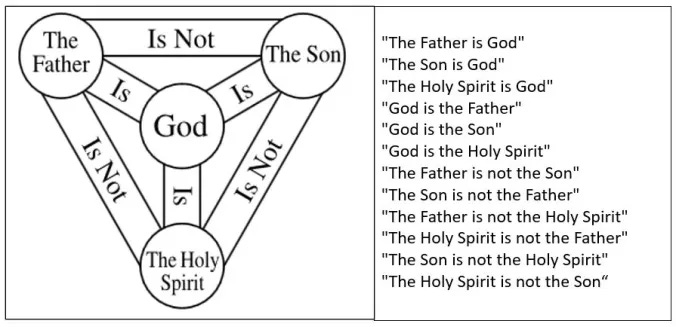
This shows that the Father is God, the Son is God, the Spirit is God—but the Father is not the Son, nor the Spirit, and so on. It's one God in three persons, not three gods.
V. False Views of God (Contrast and Clarity)
Let’s look at some alternative beliefs:
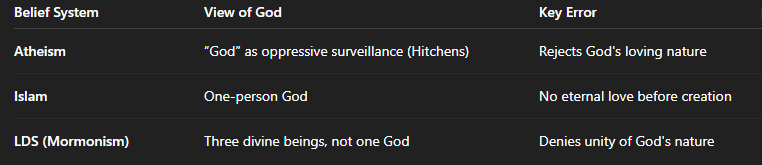
“The LDS god is not the creator of all things. He is part of creation.” — James White
Other belief systems reject the Trinity, and with it, they lose the picture of a God who is eternally relational. A single-person God could be sovereign or even merciful—but He could not be love itself.
Group Prompt:
How does knowing God as Trinity challenge the way people typically think about God?
VI. The Trinity and the Beauty of God
“Apart from anything else, God is also beautiful.” — Karl Barth
Only the Trinity makes sense of the God who is love (1 John 4:8). Love didn’t start when God created us. It’s who He is—forever:
The Father has always loved the Son in the joy of the Spirit.
Without the Trinity, there is no eternal relationship, no joy, no community in God Himself. But with it, we see the radiant beauty of divine love overflowing from eternity into creation.
VII. The Trinity Motivates Our Mission
God’s love doesn’t just stay within the Trinity—it spills outward.
“Like Father, like Son.” — Michael Reeves
The Father sends the Son → the Son sends the Spirit → the Spirit sends the Church.
“As the Father has sent me, even so I am sending you.” — John 20:21
“You will receive power when the Holy Spirit has come upon you.” — Acts 1:8
“Go therefore and make disciples… baptizing them in the name of the Father and of the Son and of the Holy Spirit.” — Matthew 28:19
🌀 Reflection Question:
How does knowing the Trinity reframe the way we think about sharing the gospel?
VIII. Living in Light of the Trinity
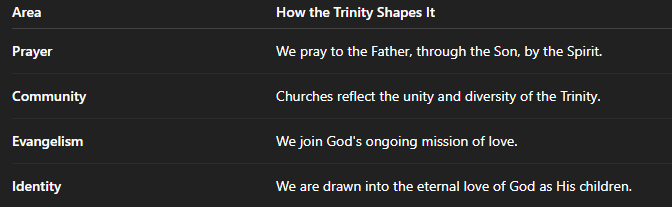
Here’s how the Trinity shapes everyday Christian life:
IX. Final Thought
The Trinity is not some bonus belief for theologians—it’s the blazing center of Christian joy, mission, and worship.
The Christian God is not a lonely ruler or a distant power. He is Father, Son, and Spirit—overflowing with love, beauty, and life.
As Michael Reeves says:
“The Trinity allows for the full explanation of God... For the new humanity is a new family; it is the spreading family of the Father.” — Delighting in the Trinity
So let us not treat the Trinity as a riddle to be decoded. Let’s behold it as a glory to be enjoyed.